

Confidence Doesn't Argue
The businesses most secure in their own quality are usually the ones least likely to fight in their own comment section. Defensiveness is often a tell, not a strength. This week we're talking about the question every business should ask before responding to criticism — not "is the customer right," but "is this argument worth winning, and what does winning it cost?"
The businesses most secure in their own quality are usually the ones least likely to fight in their own comment section.
That's not an accident, and it's not passivity either. It's something closer to confidence in motion — the kind that doesn't need to win an argument to know it's right. Defensiveness, on the other hand, is often a tell. The louder a business insists it did nothing wrong, the more it's worth asking what it's actually defending.
Nobody's Perfect — Not Even the Good Ones
Every business has an off day. The best restaurant in town has a slow night where an order comes out wrong. The most reliable contractor has a job that runs late. The most beloved local shop has a day where someone walks out unhappy.
This isn't a flaw unique to businesses that are struggling. It's universal. What separates the businesses that hold up over time isn't the absence of bad moments — it's what happens in the moment right after one.
Customers don't actually expect perfection. They're watching for something else entirely: whether a business can be wrong without falling apart.
The Wrong Question
For years, the going wisdom has been some version of "the customer is always right." Nobody really believes that, and pretending to is part of what makes a lot of review responses feel hollow — defensive scripts dressed up as customer service.
Here's a better question: is this argument worth winning, and what does winning it actually cost?
Because a comment-section argument isn't really about who's factually correct. It's about what kind of business shows up in public when things get uncomfortable. Winning the argument and losing the room are not mutually exclusive — they often happen at exactly the same time.
When Winning Becomes Losing
A version of this played out publicly not long ago. A small business owner, faced with a critical review, went all-in defending himself — point by point, publicly, repeatedly. He wasn't entirely wrong about the facts. But the fight itself became the story, and it drew a crowd: people weighing in who had never set foot in the business, drawn by the spectacle rather than the product.
There's a version of this that looks like a win. Engagement spikes. The post travels. For a moment, everyone's talking about the business.
But curiosity isn't trust, and traffic isn't loyalty. The people showing up to watch a fight were never going to become customers — they were going to watch, comment, and move on. Being found, even loudly, is not the same as being chosen. The attention spends fast and rarely returns.
What Restraint Actually Looks Like
Restraint isn't the same as silence, and it isn't the same as rolling over either. It looks like responding to criticism with humility instead of defense — acknowledging what went wrong without over-explaining or relitigating it in public.
It also looks like trusting your own customers to do some of the work. A business that consistently delivers earns advocates who will push back on an unfair review without ever being asked to. That kind of defense lands differently than anything the business says about itself — because nobody assumes the business is being objective about itself.
And it looks like trusting that the actual rebuttal isn't a comment thread. It's tomorrow's service. The next customer's experience. Consistency is the argument that doesn't need to be made out loud.
Whether You're Recovering or Preparing
Some businesses reading this are in the middle of a version of this situation right now, looking for a way to turn it around. Others are reading this thinking, that's not us — but it could be, and wondering what to put in place before it ever becomes a problem.
Both are good reasons to have a conversation.
This is where we spend a lot of our time — helping businesses respond with transparency instead of defensiveness; and tailoring that response to the actual situation rather than reaching for a generic template that sounds like every other apology online. The right response in the moment is what protects a business in the long run, whether that means working through recovery after a misstep or laying groundwork well before one is ever needed.
This isn't theoretical for us at Elevate Atlas. We've seen a range of these situations play out, from a range of angles — and we know that the businesses that come out ahead are rarely the ones that fought the hardest. They're the ones that stayed steady.
What No Marketing Budget Can Buy
No marketing can replicate the trust built by genuinely good experiences. And no marketing can argue its way out of consistently poor ones.
The product and the experience are the strategy. Everything else — the responses, the tone, the restraint — is just how that strategy shows up when things don't go perfectly.
Confidence doesn't need to win the argument. It just needs to keep showing up.
Size doesn't determine trust. Consistency does.
Desirae Schwertel is a visibility and customer experience strategist focused on how businesses are discovered and chosen in local search environments. She helps organizations strengthen how they show up across search, maps, reviews, and emerging AI-driven discovery so visibility builds trust and supports real business growth.
Content is provided for general informational purposes only. Opinions expressed are personal and do not reflect the views of any current or former employer.

What Happens in That Moment
There's a moment — it happens in seconds — where someone goes from finding your business to deciding whether you're worth their time. Most small business owners have never looked at their business from that side of the door. That gap is exactly where the distance between being found and being chosen lives — and it's more closeable than you think.
There is a moment — it happens in seconds — where someone goes from finding your business to deciding whether you're worth their time.
They found you. Maybe through a search, maybe through a recommendation, maybe because someone they trust mentioned your name. That part worked. But what happens in that moment is where most businesses have a blind spot. What does a customer actually encounter in that window? And does what they find make them want to stay — or keep looking?
Most small business owners have never stood on that side of their own front door. And that gap, more than almost anything else, is where the distance between being found and being chosen lives. Because that moment isn't singular. Every time a customer encounters your business — on a search result, a review platform, a social page, a referral — is a moment that matters. And those moments are either building something or quietly eroding it.
You're Probably Already Doing More Than You Think
Here's what we see consistently: most small businesses aren't starting from zero. They have a presence. They're collecting reviews. They're showing up somewhere across the digital landscape. The effort is there.
What's missing isn't effort. It's evenness.
One or two things working well while the others quietly undermine the overall picture is where trust erodes — slowly, invisibly, and usually without anyone noticing until the phone stops ringing the way it used to. A business with strong reviews but an outdated profile. A business that's easy to find but impossible to understand. A business that looks one way on Google and another way everywhere else.
Customers notice the gaps even when they can't name them. They just move on.
What Has to Work Together
There are four things that determine what a customer finds across every one of those moments of encounter. Not four separate initiatives — four interconnected ideas that either work together or quietly work against each other.
Being found. This is the entry point, but it's more than just showing up in results. It's the quiet relief a customer feels when they find a business that looks credible before the first interaction — one that signals, without a word being spoken, that this is a real, established, trustworthy operation. Findability isn't just visibility. It's the first moment that matters, before you even know someone is watching.
Being understood. When a customer lands on your business, do they immediately recognize that you get who they are and what they need? Not through a tagline, but through the specificity of how you describe what you do, who you serve, and why it matters. The feeling here is recognition — the sense that this business was built for someone like me. That feeling, in that moment, is what keeps someone from clicking away.
Reflecting reality. Nothing erodes trust faster than a business that looks frozen in time. And that doesn't always mean outdated hours or old photos — sometimes it's the review from three months ago that nobody ever responded to. Customers read that silence. When a business reflects its current reality accurately — and actively — customers feel something specific: confidence. They don't have to wonder if anyone is still paying attention. That confidence, across every touchpoint they check, is what gets someone from the screen to your door.
Staying consistent. This is the one that binds the other three together. When everything a customer encounters — across platforms, across touchpoints, across time — feels like it came from the same place, it creates something that no single piece of content can manufacture on its own. Quiet trust. The kind that doesn't require convincing. The kind that accumulates across every moment of encounter until a customer stops looking altogether.
When all four are working together, those individual moments stop being isolated touchpoints and start becoming a relationship. A customer who doesn't need to keep looking. That's the goal.
From Visible to Chosen
Visibility gets you found. What we've described gets you chosen — and more importantly, chosen again.
The businesses that get all four right aren't just generating traffic. They're building relationships that start before the first conversation ever happens. Customers who return without being chased. Customers who tell someone else without being asked. That's not a marketing outcome. That's a trust outcome — and it compounds in ways that no single campaign ever will.
This is what local visibility means when it's working the way it should.
The Outside-In Perspective
Here's the honest challenge: most small business owners are too close to their own business to see what a customer encounters across those moments. You know your story. You know your quality. You know what you've built. But a customer encountering you for the first time doesn't have any of that context — and they're making a judgment call in seconds based on what they find.
This is where we come in.
At Elevate Atlas, we bring the outside-in perspective — the ability to look at your business the way a customer does, identify where the gaps are, and build a path toward closing them. Not with enterprise-level strategy that doesn't fit a small business reality, but with best-in-class practices translated into approaches that are realistic, appropriately sized, and built for how local businesses actually operate.
We're not handing down a playbook designed for companies with marketing departments. We're building local strategy with businesses that are too busy running their business to see their own blind spots.
Go Stand at Your Own Front Door
Look at your business the way a customer does across every moment they encounter you. Search for yourself. Read what you find. Ask whether what's out there reflects who you actually are today — and whether it makes someone want to stay or keep looking.
You don't need a marketing department to ask that question.
But it helps to have someone in your corner who knows what to look for.
Elevate Local. Ignite Global.
Desirae Schwertel is a visibility and customer experience strategist focused on how businesses are discovered and chosen in local search environments. She helps organizations strengthen how they show up across search, maps, reviews, and emerging AI-driven discovery so visibility builds trust and supports real business growth.
Content is provided for general informational purposes only. Opinions expressed are personal and do not reflect the views of any current or former employer.

The Signal That Never Needed an Algorithm
GEO. AI Search. AEO. The industry can't even agree on what to call it yet — and small business owners are supposed to know how to optimize for it? Here's what we learned from stepping back and watching the landscape: the technology is unsettled, but the baseline signals aren't. Word of mouth predates every algorithm ever written. And the businesses built on it will outlast whatever comes next.
Sometime earlier this year, we did something that felt counterintuitive for a local search visibility firm: we stopped.
Not permanently. Not even loudly. We just stepped back. One of our founders had been watching the landscape shift — new platforms emerging, established ones repositioning, the technology moving faster than anyone's ability to make sense of it — and made the call to observe before advising. To sit with the uncertainty rather than react to it.
It was the right call. It was also uncomfortable.
The Noise Had a Lot of Names
If you've been paying attention to the search and digital marketing space over the last year or so, you've probably encountered a growing pile of acronyms: GEO. AI Search. AEO. The fact that the industry can't agree on what to call any of this is, itself, a signal worth noting. We're all early. Nobody has the full picture yet — including the people confidently selling solutions for it.
What was clear was the anxiety underneath the terminology. AI-powered search engines were multiplying. Platforms were rushing to position themselves as the next discovery layer. And a very reasonable question was circulating in the background of every conversation: does what we've been doing still matter?
For small business owners, that question hits differently. You're not managing a marketing department or a technical team. You're running a business. The idea that the rules might be changing — again — is exhausting in a way that's hard to overstate.
We felt it too.
What Came Into Focus
Here's what the pause taught us.
The technical question — which platform will win, which engine will become the new default, where the signals will ultimately be captured — is genuinely unsettled. Anyone telling you otherwise is guessing with confidence. That uncertainty is real, and it's okay to name it.
But underneath that uncertainty, something else became very clear: the baseline signals haven't moved.
Accuracy. Consistency. Trust. Reputation. These are not Google-specific constructs. They are not features of any one platform or algorithm. They are what every search surface — traditional or AI-powered — is fundamentally trying to assess. The technology changes how those signals are gathered and weighted. It does not change what the signals are.
That realization changed the nature of our hesitation entirely.
The Signal That Was Always There
Word of mouth predates every algorithm ever written. Before search engines, before review platforms, before GBP and AIO and whatever acronym comes next, people found businesses the same way: someone they trusted told them about it.
Every technical system built since then has been an attempt to capture and systematize that same thing. Reviews are structured word of mouth. Citations are corroborated word of mouth. Reputation signals are aggregated word of mouth. The engine changes. The signal doesn't.
This is why the businesses that generate genuine word of mouth — through consistent, excellent work, through showing up reliably, through treating customers in ways worth talking about — are the ones whose visibility holds up across every search evolution. They were never really optimizing for the algorithm. They were just doing good work, and the algorithm was trying to find them.
What This Means for You
You do not need to understand GEO. You do not need to know which AI search engine will emerge as dominant. You do not need to restructure your business around a technology that hasn't finished deciding what it wants to be.
What you need to do is what you've always needed to do: focus on your core product or service, deliver it consistently, and give your customers something worth talking about.
The platforms will sort themselves out. The signals you're building right now will translate — because they always have.
This is the lesson our pause taught us, and it's the same one we'd offer to any small business owner who's been holding their breath waiting for the landscape to settle: you don't have to wait. The fundamentals aren't on hold.
Consistency was the advantage before any of this had a name. It still is.
Size doesn't determine trust. Consistency does.
Desirae Schwertel is a visibility and customer experience strategist focused on how businesses are discovered and chosen in local search environments. She helps organizations strengthen how they show up across search, maps, reviews, and emerging AI-driven discovery so visibility builds trust and supports real business growth.
Content is provided for general informational purposes only. Opinions expressed are personal and do not reflect the views of any current or former employer.
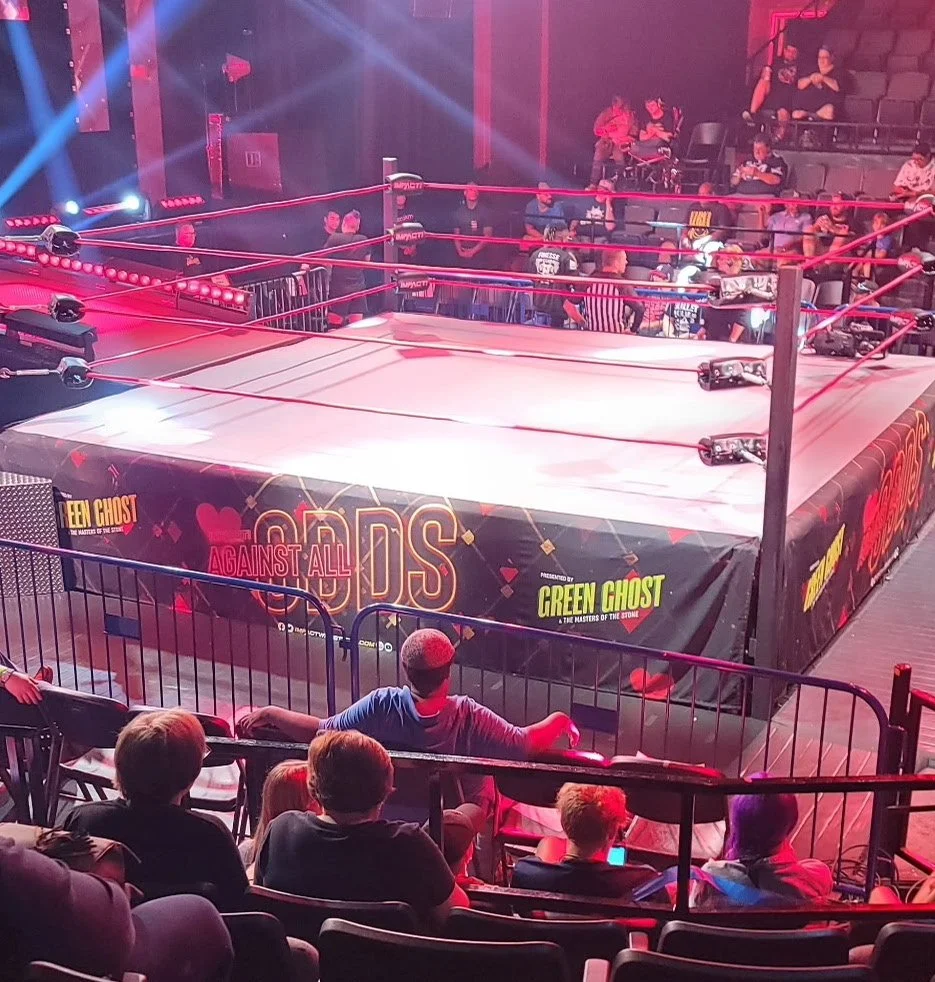
You Don't Need Wrestlemania. You Need the Right Moment.
Word of mouth has always been the most trusted form of recommendation. What's changed is where the conversation lives — and how it feeds the digital picture that determines whether your business shows up in search. Local businesses that create genuine moments in their communities are building something no paid campaign can replicate.
This weekend, one of the most anticipated events of the sport that plays a big part of one of our founder's career takes place.
National brands spent considerably around it. Sponsorships. Activations. Social campaigns timed to the moment, engineered to ride the wave of attention that a massive live event generates. All of it designed to manufacture the kind of energy and conversation that big events produce naturally.
The spend is real. The ROI is debatable. And the assumption behind it — that you need to go big to create momentum — is exactly what local businesses should push back on.
What Big Brands Are Actually Buying
Large brands don't sponsor major events because they love the sport. They sponsor them because live events do something that advertising alone cannot — they concentrate attention, emotion, and conversation in one place at one time.
That concentration produces word of mouth. Organic, unsolicited, peer-to-peer recommendation at a scale that a paid campaign can approach but never quite replicate. The sponsorship spend is an attempt to borrow that energy — to attach a brand name to a moment that already matters to people.
It works. For brands with the budget to play at that level, it works.
But the underlying mechanism isn't exclusive to big budgets. It isn't exclusive to national brands or stadium-sized audiences. It's exclusive to moments that matter to the people in the room.
And local businesses can create those.
You Don't Need Wrestlemania
You need the right moment for your community.
A neighborhood block party. A locals night at your own storefront. A youth sports tournament sponsorship where your banner is on the wall and your name is in the program. A pop-up event in partnership with two businesses down the street. A simple reason for the people who already know you to bring someone new.
These aren't consolation prizes for not having an activation budget. They're the authentic version of what national brands are spending millions trying to manufacture.
And authenticity travels differently than polish.
The parent who posts about a great experience at a local business during a community event isn't doing it because a marketing team planned for it. They're doing it because something genuinely moved them — because the moment felt real, the connection felt personal, and sharing it felt natural.
That's the signal that compounds. That's the word of mouth that outlasts the weekend.
Word of Mouth as a Structural Advantage
Word of mouth has always been the most trusted form of recommendation. Decades of customer behavior research supports this consistently across industries, markets, and customer demographics. People trust what they hear from other people – whether it’s people they know or people in a similar situation – more than what brands say about themselves.
What's changed isn't the trust. It's where the conversation lives.
Word of mouth used to stay contained — a conversation over dinner, a recommendation between neighbors, a comment made and forgotten. Today it lives in reviews, social posts, tagged photos, and community group mentions. It gets indexed. It gets searchable. And it gets synthesized by AI-driven discovery systems that are assembling a picture of your business from everything available.
The local business that creates genuine moments in its community isn't just building goodwill. It's building a word of mouth infrastructure — one that feeds digital visibility in ways that a paid campaign simply cannot replicate, because it's generated by real people in real moments that no algorithm can manufacture.
Live Moments Generate Lasting Signals
An event doesn't end when the last person leaves.
The posts, tags, check-ins, and conversations it generates keep moving — feeding the digital picture that search systems are assembling long after the chairs are stacked and the lights are off. One of our founders has spent years producing live events across entertainment, hospitality, and sports — and the pattern holds at every scale.
The moments that feel authentic to the people in the room are the ones that travel furthest afterward.
Not the most produced. Not the most expensive. The most genuine. The activation that felt like it belonged to the community — that's the one people talk about, post about, and recommend to someone who wasn't there.
That's not a production budget question. That's a genuine connection question. And local businesses are better positioned to answer it than any national brand with a seven-figure sponsorship deal.
What It Looks Like When Someone Who Knows Both Sides Is in Your Corner
Here's where most local businesses get stuck.
Not in the community presence — they're often already doing that, showing up, sponsoring, participating. The gap is in knowing how to connect those moments intentionally to the visibility they're capable of generating.
That requires two things that rarely exist in the same place.
The first is events and activation experience — knowing how to produce and market moments that generate authentic word of mouth, not just showing up and hoping something happens. Understanding what makes a local activation land versus fall flat. Knowing how to brief a partner, time a promotion, and create the conditions for genuine community engagement rather than a forgettable afternoon.
The second is search and visibility knowledge — knowing which signals from those moments actually matter, how to amplify them, and which tactics are worth a local business owner's limited time and attention. Cutting through the noise of a thousand competing recommendations to identify what actually moves the needle — without requiring that business owner to become a search expert or run experiments on their own livelihood.
Most visibility firms don't know events. Most event producers don't know search.
The businesses that benefit most are the ones with someone who understands both — and can connect those dots on their behalf, intentionally and without the guesswork.
That's the work Elevate Atlas was built to do.
Size Doesn't Determine Trust. Consistency Does.
National brands will keep spending considerably around the moments that matter to their audiences. The energy is real. The attention is real. The word of mouth is real.
But so is yours as a local business owners — if you're willing to create the right moment for the community you actually serve.
You don't need Wrestlemania. You need a reason for the people in your corner of Metro Atlanta to show up, feel something, and tell someone else about it.
The signal that creates? Its impact is more meaningful than any sponsorship deal.
Size doesn't determine trust. Consistency does.
Desirae Schwertel is a visibility and customer experience strategist focused on how businesses are discovered and chosen in local search environments. She helps organizations strengthen how they show up across search, maps, reviews, and emerging AI-driven discovery so visibility builds trust and supports real business growth.
Content is provided for general informational purposes only. Opinions expressed are personal and do not reflect the views of any current or former employer.

What Does Little League Have to Do With a Small Business Showing Up in Search?
Community connection isn't a marketing tactic. It's the natural byproduct of being genuinely embedded in the place you live and serve. And the signals it generates — online and off — are feeding the digital picture that determines whether your business shows up when someone nearby searches for what you offer.
More than you might think.
Consider two business owners at a local youth sports tournament this weekend. Both are there. One is cheering from the stands — a community member enjoying a Saturday morning. The other has a banner on the gym wall, a logo on the back of a jersey, and a name in the tournament program.
Both showed up. Only one is showing support AND building something.
That distinction — between being present in a community and being visible within it — is at the heart of how local businesses build the kind of trust that compounds over time. And increasingly, it's showing up in search in ways most local business owners haven't thought about.
What Community Connection Actually Is
Community connection for a local business isn't a marketing tactic. It's the natural byproduct of being genuinely embedded in the place you live and serve.
Sponsoring a local sports league or youth team. Showing up at a neighborhood event. Knowing the businesses two doors down by name. These aren't PR moves — they're the lived reality of an owner-operated business that exists within a community rather than adjacent to it.
That distinction matters more than it might seem. You can serve a community without being part of it. You can take orders, fulfill requests, and deliver a perfectly adequate experience — and still feel like an outsider to the people you're serving.
The businesses that build lasting trust are the ones that close that gap. Not through campaigns. Through presence.
Signals: What They Are and Why They Matter Now
Here's where it gets interesting — and where the Little League banner connects to something most business owners haven't considered.
A signal is anything — online or offline — that helps a customer or a platform form an opinion about your business. A Google review is a signal. Consistent hours across every platform are a signal. A photo of your storefront is a signal.
But so is the mention of your business in a local Facebook group. The tag in a post from a community event you sponsored. The parent who tells another parent at a youth sports tournament that the shop on the corner is worth trying.
Here's the part that changes the picture: not all signals start online. They start in the room — and then they travel.
Most people document experiences naturally. They post photos on Instagram, check in, tag locations, share moments. They're not doing it for your business. They're doing it because that's how people experience things now. But every one of those posts, tags, and check-ins is a signal — and it shows up online whether the business is thinking about it or not.
For most of business history, those signals were read only by humans — through word of mouth, observation, and shared experience. Today, they're also being read by the systems that determine whether your business gets surfaced in search at all. AI-driven discovery doesn't just look at your Google Business Profile. It's assembling a picture from everything available — a review, a community mention, a tagged photo from a Saturday morning tournament.
Community connection generates signals on both channels simultaneously. That's the bridge between the banner on the gym wall and the business that shows up when someone nearby searches for what you offer.
Live Signals Feed Digital Signals
A local business that sponsors a youth sports league isn't thinking about search optimization. But what that sponsorship generates — mentions, tags, community visibility, authentic local presence — feeds the digital picture that search systems are assembling whether you're paying attention or not.
Every person in that room with a phone is a potential signal source. They're already posting, checking in, and tagging — naturally, without prompting, because that's what people do. The business whose name is visible in that environment benefits from every one of those unsolicited moments.
That reframes the ROI of community presence entirely. It's not just goodwill. It's not just brand awareness. It's organic signal amplification happening in the background — generated by real people, in real moments, in ways that no ad campaign can fully replicate.
The business owner with the banner isn't just building community relationships. They're building a signal footprint that compounds quietly over time in ways that a business existing only behind a screen simply cannot.
You Don't Need a Budget to Start
Here's the part that matters for businesses that aren't ready to sponsor a league or underwrite an event: community connection doesn't require a budget line.
Being genuinely present at a neighborhood event. Engaging authentically in local social media groups. Publicly supporting another local business. Or opening your own doors — a locals night, a neighborhood preview, a simple reason for the community to come to you rather than the other way around. Showing up consistently in the places where your community already gathers — online and off.
These are all signal-generating behaviors. They're available to any owner-operated business regardless of size, budget, or how long they've been open. The investment isn't always financial. Sometimes it's just intentional presence.
You Don't Have to Figure This Out Alone
The harder part — for most local businesses — isn't showing up in the community. They're already doing that. The harder part is knowing how to connect those dots intentionally. How to take the community presence that's already being built and orchestrate it into visibility that compounds online.
That's where the work gets strategic. And it's where Elevate Atlas operates — helping local businesses understand which signals matter, where they're already generating them without realizing it, and how to be more intentional about turning genuine community presence into lasting local visibility.
The banner on the gym wall is already doing more than you think. The question is whether you're building on it.
Size Doesn't Determine Trust. Consistency Does.
The businesses with the deepest community roots aren't the largest or the most polished. They're the ones whose presence is felt both in the room and in the results — because they showed up consistently, in the places that mattered, long before anyone told them it was a search strategy.
Size doesn't determine trust. Consistency does.
Desirae Schwertel is a visibility and customer experience strategist focused on how businesses are discovered and chosen in local search environments. She helps organizations strengthen how they show up across search, maps, reviews, and emerging AI-driven discovery so visibility builds trust and supports real business growth.
Content is provided for general informational purposes only. Opinions expressed are personal and do not reflect the views of any current or former employer.

The Proximity Advantage
Loyalty isn't built through programs, promotions, or a larger menu. It's built through presence — the kind that knows your regular order, notices when you haven't been in, and earns the kind of trust that survives imperfection. Local businesses have a proximity advantage that enterprise brands spend millions trying to manufacture. Here's what that looks like in search.
There is something distinct about walking into a place that knows you.
Not in a formal, loyalty-program kind of way. In the quieter way — where your usual order is already being started, where the person behind the counter asks about something you mentioned last time, where the experience feels less like a transaction and more like a continuation. It's a small thing. And it's one of the most powerful trust signals a local business can produce — because it genuinely cannot be manufactured at scale.
When Loyalty Gets Tested
We have a breakfast spot we return to most weekends. Or we did, until a couple of visits in a row didn't quite land the way we'd come to expect. Nothing dramatic. Just enough of a gap between what we'd come to expect and what arrived on the plate to make us wonder if something had shifted.
So we tried somewhere new.
The first visit was genuinely excellent — the kind of experience that makes you think you've found something worth returning to. We even left talking about how this could be our "new breakfast place." The second visit told a different story — poor food, no greeting, and stand-off service. The menu was larger, the options broader, but something about the experience felt less settled. Less consistent. Good enough, but not the kind of good that pulls you back.
This past Saturday, we went back to the original spot.
It turns out they had been going through an ownership change — the kind of transition that can quietly disrupt everything from the kitchen to the culture. But the food was excellent. The familiarity was still there. And walking back in felt less like a second chance and more like a homecoming.
Had we not had those experiences elsewhere, we might never have returned. However, we like to stay local — and that instinct turned out to be worth following.
What Enterprise Brands Spend to Get Here
Last week at the X4 Conference, thousands of organizations were comparing notes on how to understand their customers more deeply. Research programs. Voice of the Customer surveys. AI-driven insight tools. Synthetic personas designed to stress-test the customer journey before a real customer ever encounters it.
All of it in pursuit of one thing: knowing their customers well enough to anticipate what they need.
The irony sitting in those sessions was hard to miss. The local business owner who has been open for five years — who knows half their regulars by name, who notices when someone hasn't been in for a while, who remembers that one customer takes their coffee with half-and-half — has already unlocked what those programs are trying to manufacture.
Not through technology. Through presence.
Depth Over Breadth as a Strategic Choice
The restaurant we tried had a larger menu. More options. Broader appeal on paper. It wasn't enough.
This is the tension many local businesses navigate — the instinct to expand, to add services, to broaden messaging in hopes of capturing a wider audience. It's a reasonable instinct. But breadth and depth are not the same thing, and they don't compound the same way.
A business known exceptionally well for one thing — by a customer base that trusts it completely — generates something that no expanded menu and no ad budget can reliably replicate. Reviews that are specific and detailed. Referrals that come with a personal endorsement. Repeat visits that happen without a coupon, loyalty program, or referral perk to trigger them.
This isn't an argument for staying small or limiting ambition. It's an argument for being intentional about where attention gets invested. Because depth, built consistently over time, has a way of becoming the thing that's hardest for anyone else to compete with.
What It Looks Like in Search
Customer relationship depth doesn't stay contained to the in-person experience. It shows up in search.
Customers who feel genuinely known leave different reviews — more specific, more textured, more useful to the next person evaluating whether a business is worth trying. They refer more naturally, in conversations and online. They return without needing to be prompted. Each of those behaviors produces a signal. And those signals, accumulated over time, build the kind of visibility infrastructure that compounds — not because it was optimized for, but because it was earned.
The businesses that show up consistently and credibly in local search aren't always the ones with the largest presence or the biggest marketing budget. They're often the ones whose customers have the most to say — and mean it.
Size Doesn't Determine Trust. Consistency Does.
The breakfast spot we returned to this Saturday didn't win us back with a promotion or a rebrand. It won us back by being what it had always been — in fact, we didn't realize the ownership change before returning. We were just pleased to see the spot returning to what we had always known and expected. The transition hadn't been visible to us as customers, but the return to form was.
That's the proximity advantage. The ability to know your customers well enough that loyalty survives imperfection. The ability to recover not through a customer service protocol but through genuine familiarity and care.
Large brands spend considerable resources trying to get there. Local businesses can start there — if they're intentional about it.
The harder part is knowing which tactics actually matter for a local business versus which ones are designed for a different scale entirely. The marketing landscape is loud, and a lot of what gets amplified was built with enterprise budgets and enterprise problems in mind. Sorting through what applies to your business — and what doesn't — is part of the work. It's where Elevate Atlas operates: helping local businesses cut through the noise to focus on what actually builds trust, visibility, and the kind of customer relationships that compound over time.
Size doesn't determine trust. Consistency does.
Desirae Schwertel is a visibility and customer experience strategist focused on how businesses are discovered and chosen in local search environments. She helps organizations strengthen how they show up across search, maps, reviews, and emerging AI-driven discovery so visibility builds trust and supports real business growth.
Content is provided for general informational purposes only. Opinions expressed are personal and do not reflect the views of any current or former employer.

What Twenty Years of CX Just Taught Us About Local Search
Last week at Qualtrics X4, something clicked. The principles the best brands have been pursuing in CX for two decades are the same ones creating a structural advantage in local search today. Two disciplines, running parallel for twenty years — and they've arrived at the same destination. This isn't a coincidence. It's a convergence — and it changes how local businesses should think about visibility.
Last week, I was at Qualtrics X4 — one of the largest gatherings of customer experience (CX) professionals in the world. Thousands of organizations, comparing notes on how to build remarkable experiences, close the gaps between promise and delivery, and earn the kind of trust that keeps customers coming back.
Sitting in the middle of it, something clicked.
The principles that the best brands have been pursuing in CX for twenty years are the same ones that create a structural advantage in local search today. This isn't a coincidence. It's a convergence — and it changes how local businesses should think about their visibility.
CX Was Never Just About Retention
For years, customer experience has been framed primarily as a retention strategy. Keep customers happy, reduce churn, build loyalty. It works; and the data has always supported it.
But something has shifted. In an environment where AI-driven discovery synthesizes what customers say publicly alongside what businesses claim, CX isn't just a retention strategy anymore. It's a visibility strategy.
The brands that invested in understanding their customer journey — honestly, not aspirationally — find it easy to be transparent in search because they already know their own truth. They faced the gap between what they promised and what customers actually experienced. Then they worked to close these gaps.
CX organizations that did this well didn't just fix problems — they got honest about them. And that honesty is exactly what local search rewards now.
Where Search is Heading
AI-driven discovery doesn't evaluate marketing claims in isolation. It synthesizes signals across platforms, reviews, profiles, and social media to assess whether a business's story holds up. The businesses that get surfaced confidently and recommended consistently are the ones whose signals are aligned — because what they say and what customers experience are the same thing.
That's not a search strategy; it’s a transparency posture. And it's exactly what CX has been building toward for two decades.
Transparency Is Where CX and Search Converge
Whether working to improve the customer experience or to show up in search results, businesses must ask themselves the same questions:
What do we actually promise our customers?
What are customers actually experiencing?
Where is the gap — and what's it costing us?
Brands that did the hard CX work find it easy to be transparent in search because they already know their own truth. For local businesses, the same path is available — and the starting point is identical: honest assessment before any optimization.
Transparency was never just an ethical posture. In today's search environment, it's structural. The signals your business puts out — accurate hours, honest service descriptions, a review presence that reflects real customer experience — are the inputs that shape how your business gets interpreted, summarized, and recommended. Or not.
The Small Business Advantage: Proximity, Agility, and No Red Tape
Here's what often gets missed in the CX conversation: local businesses have advantages that enterprise brands spend millions trying to manufacture.
Proximity is the first one. A local owner knows their customers in a way that large organizations build entire research programs trying to replicate. That closeness is a built-in CX asset — and a visibility asset.
Agility is the second. And this is where the SMB advantage becomes most tangible. A local business owner can read a difficult review, make a decision, and resolve it before a large brand's customer service process has even opened a ticket. No approval chains. No escalation paths. No red tape between the feedback and the response.
That's not a consolation prize for not having a CX department. It's a genuine structural advantage — and it shows up directly in search. A business that engages with reviews — positive and critical alike — is demonstrating exactly what AI-driven discovery is looking for: alignment between what a business claims and how it actually behaves when customers weigh in publicly.
Reviews are one of the clearest outside-in signals a local business has access to. They're customers telling you, publicly, where the experience matched the promise — and where it didn't. Engaging with that feedback openly and without defensiveness is both a CX principle and a search signal. The businesses that understand both are the ones that compound trust over time.
The goal isn't to replicate what large brands do. It's to lean into what they can't.
The Outside-In Perspective — And Where to Start
Facing the truth about gaps is hard from the inside, regardless of business size. It was true for enterprise CX programs twenty years ago, and it's true for local businesses navigating visibility today. Sometimes the most valuable thing an outside perspective does is make it safe to see what was already there.
This is where Elevate Atlas operates. Not as a vendor selling a visibility package, but as a strategic partner that starts with an honest assessment — what's working, what's fragmented, and where the gap between promise and presence is costing a business the consideration it doesn't know it's losing. The same questions CX has always asked; only now applied to the platforms and signals that determine how local businesses get found, evaluated, and chosen today.
The starting point is always the same: understand where you actually stand before recommending anything.
Two Disciplines. One Destination.
Customer experience and local search visibility have been running parallel for two decades. Different language, different tools, different practitioners — but the same underlying pursuit. Consistency. Clarity. Trust.
They've arrived at the same destination.
For local businesses willing to ask honest questions about how they show up — the path forward has never been clearer. And the advantage that comes from getting this right compounds quietly, over time, in exactly the way the best CX programs always promised it would.
Visibility should reflect reality.
Desirae Schwertel is a visibility and customer experience strategist focused on how businesses are discovered and chosen in local search environments. She helps organizations strengthen how they show up across search, maps, reviews, and emerging AI-driven discovery so visibility builds trust and supports real business growth.
Content is provided for general informational purposes only. Opinions expressed are personal and do not reflect the views of any current or former employer.

Transparency Is the New Trust Signal
AI doesn't fabricate your story — it assembles it from the signals you've already put out. In an age where discovery happens before contact, transparency isn't just good practice. It's your most reliable trust signal.
This past Saturday, we needed cat food.
Anyone with cats knows there's no negotiating the 8 a.m. feeding window. So Eric pulled up Google, asked what time the local pet supply chain opened, and the AI Overview came back with a confident answer: 7 a.m.
That seemed early. But it was there, clearly stated, so we went with it.
The store didn't open until 9.
What actually opened at 7 was the grooming department — a separate service, separate hours, same location. Accurate information, surfaced without the context needed to make it useful. AI assembled the picture from the signals that were available. The problem wasn't fabrication. It was fragmentation.
Now, here's the thing — it didn't ruin our opinion of the brand. We know how large retailers work. Corporate hours, franchise variations, seasonal adjustments. There's an understood gap between what a brand publishes centrally and what any individual location actually does. We extended grace almost automatically. And frankly, a brand with decades of recognition and marketing budgets large enough to redirect attention can absorb that friction in ways most businesses simply can't.
Unfortunately, that grace isn't universal. And it isn't free.
For a small, local business — a boutique, a service provider, a neighborhood shop — a disconnect like this lands differently. Unreliable. Disorganized. Not sure what the experience will be like. Not worth the risk of a second attempt.
Customers don't always say that out loud. They just move on — to a competitor, or simply away. Either way, the business rarely finds out.
This is the moment worth sitting with.
AI-driven discovery tools — the same ones increasingly shaping how customers find and evaluate local businesses — are synthesizing signals from across the web. Business profiles, directories, third-party listings, review platforms. When those signals are consistent and accurate, the picture that gets assembled is trustworthy. When they aren't, a picture still gets assembled. It just may not reflect reality.
The situation above is a useful illustration of how this plays out. It wasn't one wrong answer — it was partial information, pulled from multiple sources, presented as complete. For a local business with multiple service offerings, different team members, or even just seasonal hours, the same fragmentation risk exists. When information is fragmented — even unintentionally — it creates the kind of quiet doubt that costs a business the consideration it never knew it was losing. Being found is only the beginning. Being understood accurately is what moves someone from a search result to a decision.
AI systems don't just surface what brands say about themselves. They synthesize what customers say, what third-party platforms reflect, and what the consistency — or inconsistency — of your signals actually suggests. The gap between what a business presents as its public image and what it actually delivers has never been more visible. Or more consequential.
Transparency, in this environment, isn't just an ethical posture. It's structural. Accurate hours, honest service descriptions, current photos, a review presence that reflects real customer experience — these aren't just good habits. They're the inputs that shape how your business gets interpreted, summarized, and recommended.
And here's the part that often gets overlooked: this isn't a high bar. It's table stakes. Think about your own behavior as a consumer. When you're evaluating an unfamiliar business, you expect the basics to be accurate. You expect to find consistent information. You expect that if something went wrong for a previous customer, the business acknowledged it. That baseline expectation doesn't disappear when the roles are reversed — your customers expect the same from you.
Which means transparency isn't a risk to manage. It's a standard to meet.
That includes the uncomfortable moments. A negative review, handled openly and professionally, does something a polished profile can't — it shows how a business behaves when things don't go perfectly. For a customer evaluating an unfamiliar business, that's often the most useful signal of all. Not perfection. Accountability. Businesses that engage with difficult feedback aren't exposing weakness — they're demonstrating exactly the kind of reliability customers are looking for before they ever make contact.
For years, managing a brand's digital reputation often meant crafting the right message and publishing it in the right places online. The assumption, mostly reasonable at the time, was that you could shape what customers saw before they experienced your business firsthand.
That assumption is becoming harder to rely upon in today’s digital and AI age.
The businesses that navigate this shift well aren't necessarily the loudest or the most polished. They're the ones whose digital footprint reflects the reality customers face — consistently, across every platform where customers are already looking.
When what you say aligns with what customers experience, AI doesn't distort the picture. It amplifies it.
And unlike a large brand with decades of recognition and the marketing budget to redirect attention after a misstep — the local business that gets this right builds something that compounds quietly over time. Not through volume. Through alignment.
Trust isn't just what customers feel when they choose you.
It's what they feel when they show up and you're actually open.
Visibility should reflect reality.
Desirae Schwertel is a visibility and customer experience strategist focused on how businesses are discovered and chosen in local search environments. She helps organizations strengthen how they show up across search, maps, reviews, and emerging AI-driven discovery so visibility builds trust and supports real business growth.
Content is provided for general informational purposes only. Opinions expressed are personal and do not reflect the views of any current or former employer.

AI Doesn’t Replace Your Signals — It Interprets Them
Every era of SEO had its shortcuts. They worked — briefly. Then platforms adjusted. AI-driven discovery accelerates that cycle. Visibility doesn’t compound through distortion. It compounds through alignment.
Search has always had its hacks. Every era of SEO introduced a new “hack” — a tactic that promised acceleration. Keyword stuffing. Link schemes. Thin content networks. Technical loopholes. For a moment, they worked; rankings moved and traffic spiked.
Then platforms adjusted. Gaps closed. And the businesses that had invested heavily in exploiting those shortcuts were often left rebuilding — sometimes having diverted time and resources away from the real foundation of their visibility.
This pattern isn’t new. What is new is the speed.
Today, platforms — including AI-driven discovery systems — identify and close gaps faster than ever. What might have delivered short-term results for months now compresses into weeks. Sometimes days.
The question is no longer whether a hack “works.” The more strategic question is where you want your time and resources directed. Do you invest in exploiting temporary gaps? Or in strengthening the signals that compound over time?
To understand why this matters, it helps to step back.
Search platforms (like Google or Bing) don’t close hacks because they dislike businesses or particular brands. They close them because their survival depends on delivering accurate, relevant results to users. If shortcuts distort relevance, user trust erodes. And when user trust erodes, platform trust erodes.
Platforms are incentivized to reward alignment — not distortion.
AI-driven discovery accelerates this dynamic. These systems synthesize signals across websites, reviews, business profiles, landing pages, on-page content, and engagement patterns. They don’t just surface content — they assess alignment. They compare what you say about your business with what customers experience and reflect back in reviews. They weigh consistency across language, positioning, and behavioral patterns.
AI doesn’t create credibility. It interprets it.
If your messaging is consistent, that consistency becomes more visible. If your positioning is inflated, vague, or disconnected from customer experience, that inconsistency surfaces as well.
Hacks attempt to distort signals. Modern systems are increasingly designed to filter distortion.
When visibility reflects reality — when how you present your business mirrors how you actually operate — interpretation strengthens. Trust compounds. Decisions feel easier to your prospects.
When visibility attempts to outpace reality, platforms eventually correct the imbalance. They always have. Technology evolves. Interfaces change. New surfaces emerge.
The principle remains steady: discovery systems interpret signals. They don’t create them.
Shortcuts fade. Signal integrity compounds.
At Elevate Atlas, this is the long-term lens through which we guide our work. Not toward temporary acceleration, but toward signal alignment that compounds. Our philosophy isn’t built on chasing gaps — it’s built on helping businesses prioritize the work that sustains visibility long after platforms shift and short-term “hacks” are closed.
Visibility should reflect reality.
Desirae Schwertel is a visibility and customer experience strategist focused on how businesses are discovered and chosen in local search environments. She helps organizations strengthen how they show up across search, maps, reviews, and emerging AI-driven discovery so visibility builds trust and supports real business growth.
Content is provided for general informational purposes only. Opinions expressed are personal and do not reflect the views of any current or former employer.

Clarity is a Trust Signal in Local Search
Consistency across how your business shows up doesn’t just attract customers — it builds loyalty. When expectations are clear, reviews strengthen and word-of-mouth reinforces what you stand for. In modern search environments, clarity is one of the strongest signals you can send.
In local search, clarity isn’t just helpful — it’s a trust signal.
Customers don’t spend long trying to decode what a business does. They scan. They compare. They narrow. In those few seconds, they aren’t looking for more information. They’re looking for reassurance.
When a business communicates clearly — what it offers, who it serves, and what makes it distinct — that reassurance builds quietly.
Clarity isn’t about clever wording. It’s about reducing uncertainty.
Consider a local business that describes itself as a “full-service home solutions provider.” The phrase sounds capable; even impressive. But what does it actually mean? Plumbing? Remodeling? Electrical? Emergency repairs?
When customers can’t quickly anchor what a business does, hesitation appears. Not because the business lacks expertise — but because the risk feels harder to measure.
Confusion rarely feels neutral. It reads as risk.
And risk slows decisions.
In local search environments, this matters more than ever. Your website, reviews, business profile, and social presence are interpreted together. When your positioning is consistent across those touchpoints, understanding becomes easier — and trust compounds.
When expectations are met consistently, confidence grows into loyalty. Customers begin to recognize what you stand for. Reviews reflect clarity instead of confusion. Word-of-mouth becomes reinforcement rather than reinterpretation.
For many business owners, that kind of clarity sounds simple on paper. In practice, it can feel bigger.
Sometimes conversations about clarity can feel overwhelming — as if improving visibility requires rewriting everything at once.
It doesn’t.
More often, clarity is about refinement, not reinvention. It’s about identifying where messaging has drifted, where signals feel fragmented, and where small adjustments can create stronger alignment across how a business shows up.
That outside-in perspective is part of the work we care deeply about at Elevate Atlas. Our philosophy isn’t to create ongoing reliance — it’s to help local businesses understand what truly matters in modern search environments, build confidence in their own positioning, and move forward with clarity that lasts beyond any single engagement.
There’s a growing belief that visibility can be accelerated by focusing on a single new platform or AI shortcut. But discovery doesn’t work in isolation. AI doesn’t replace your signals; it synthesizes them. If your messaging is fragmented, that fragmentation follows you.
Clarity reduces cognitive load. It makes comparison easier. It strengthens recognition.
In crowded markets, many brands try to differentiate by being louder. But loud and clear are not the same thing.
Specificity builds trust. Consistency builds recognition. Clarity builds momentum.
Sometimes improving clarity isn’t about rewriting everything. It’s about stepping back and asking:
Is this easy to understand?
Is it aligned everywhere we show up?
Does it reflect who we actually are?
In a world filled with noise, being clear is one of the strongest signals you can send.
You don’t need to be everything. You need to be understood.
Desirae Schwertel is a visibility and customer experience strategist focused on how businesses are discovered and chosen in local search environments. She helps organizations strengthen how they show up across search, maps, reviews, and emerging AI-driven discovery so visibility builds trust and supports real business growth.
Content is provided for general informational purposes only. Opinions expressed are personal and do not reflect the views of any current or former employer.

Clarity Is What Makes You Understandable
Local businesses don’t need to mirror big-brand strategies to grow. Distinctiveness, community connection, and clear positioning often matter more than broad messaging. This post looks at how clarity helps small businesses become easier to understand — and easier to choose.
Most small business owners don’t struggle with effort, they struggle with focus. Over time, services expand, messaging stretches, and websites try to speak to everyone at once. The intention is growth. From the outside, though, it can make a business harder to understand, not easier to choose.
Right now, clarity matters more than ever. As search evolves — with AI shaping how businesses are interpreted and surfaced — people aren’t just scanning for keywords or long lists of offerings. They’re looking for signals that help them understand, quickly and confidently, what a business stands for and who it’s really for.
When a brand’s positioning becomes clearer, discovery becomes easier for potential customers — not because you’re doing more, but because you’re saying less with more intention.
It’s natural to believe that broader messaging creates more opportunity. If you gain more views, clicks, impressions, etc., it’s easy to think the business will follow. From the inside, every addition makes sense. Each service, each audience, each new offering reflects real relationships and real growth. But messaging often evolves faster than positioning. Over time, what started as expansion can quietly dilute what a business is most clearly known for in its local community.
This isn’t a misstep. It’s a common outcome of success — especially for local businesses that grow through trust and word of mouth.
Customers don’t see the full story behind a business. They see a moment: a search result, a profile, a few photos, a list of services. In that brief window, they’re trying to answer a simple question: Is this business going to easily and effectively meet my needs?
Large brands approach this differently. They carry recognition and scale, which allows them to speak to multiple audiences at once without losing clarity. A national brand can promote a wide range of offerings because customers already understand the foundation of who they are.
Local businesses don’t always have that advantage. When messaging stretches too broadly, customers may struggle to quickly place the business and its services in their minds. And when people can’t easily understand what makes a business distinct, hesitation appears — not because the business lacks capability, but because clarity feels uncertain.
Confusion rarely feels neutral to a customer. It often reads as risk.
And when clarity starts to take shape, businesses often notice something shift internally too — decisions feel steadier, messaging feels lighter, and confidence grows quietly in the background.
Why is this important? The discovery landscape itself is growing. Users increasingly turn to new and different platforms, with not one single platform capable of dominating the search landscape.
Today’s search environments — including AI-driven experiences — are becoming better at interpreting coherence across signals. Consistent messaging, aligned reviews, recognizable strengths, and clear positioning all contribute to how a business is understood.
That’s why trying to “jump ahead” by focusing on a single new platform or shortcut rarely creates lasting clarity. There’s a growing narrative that businesses can simply set up an AI profile and bypass everything else — but discovery doesn’t work that way. AI doesn’t replace the signals that already exist; it interprets them. Understanding is built across presence, not through a single hack.
In many ways, clarity is becoming more important than volume. Businesses that communicate who they are with intention often stand out more naturally than those trying to expand in every direction at once.
Clarity doesn’t reduce opportunity. It refines it.
Small businesses carry an advantage that large brands often struggle to replicate: distinctiveness. Local expertise, recognizable personality, and genuine community connection create signals that feel human and memorable.
However, when messaging starts to mirror big-brand strategies — broader positioning, more generalized language, an effort to appeal to everyone equally — that distinctiveness can fade. The very qualities that make a business stand out locally can become harder to recognize when everything is presented at the same volume.
Being understood isn’t about shrinking what you offer. It’s about anchoring your brand’s identity so customers know what you do best and why it matters (or should matter) to them.
When clarity comes into focus, confidence tends to follow. Customers recognize the business more quickly. Decisions feel easier. And the business itself often feels more grounded in its own strengths.
Sometimes clarity isn’t about adding more — it’s about stepping back far enough to see what’s already there. An outside perspective can help reveal patterns that are difficult to notice from the inside: where messaging has drifted, where strengths already exist, and where small shifts can create stronger understanding.
That outside-in lens is part of the work we care deeply about at Elevate Atlas — helping local businesses refine how they’re seen without losing the authenticity that made them successful in the first place.
Because growth doesn’t have to mean becoming everything to everyone; sometimes, it simply means becoming clearer about who you already are.
You don’t need to be everything. You need to be understood.
Desirae Schwertel is a visibility and customer experience strategist focused on how businesses are discovered and chosen in local search environments. She helps organizations strengthen how they show up across search, maps, reviews, and emerging AI-driven discovery so visibility builds trust and supports real business growth.
Content is provided for general informational purposes only. Opinions expressed are personal and do not reflect the views of any current or former employer.

Search isn’t Slowing Down; It’s Accelerating
Search isn’t just changing — it’s accelerating. As AI-driven discovery evaluates businesses through multiple lenses at once, clarity and strong positioning matter more than ever. The businesses that stand out aren’t the loudest — they’re the ones that are easiest to understand.
For years, search felt straightforward. Someone opened up Google or Bing, typed a question, reviewed a handful of options, and decided which business to contact. Today, that process is changing — not because people are asking different questions, but because those questions are being evaluated through more lenses at once. What feels like one search is often a much broader evaluation happening behind the scenes.
Think about someone asking a question like: “Who’s the best florist near me?”
At first glance, it sounds like a single search. But what does best actually mean?
For one person, it might mean fastest delivery.
For another, it might mean locally sourced flowers.
For someone else, it might be variety, price range, online ordering, or extended hours.
Traditionally, a customer might run several separate searches to figure that out — comparing reviews, browsing profiles, and clicking through multiple websites.
AI-driven discovery changes this dynamic. Instead of viewing a question through one lens at a time, AI systems, like ChatGPT, Gemini, or Perplexity, can evaluate many possible definitions of “best” simultaneously — then bring those perspectives together into a single answer. What used to take several searches (and several minutes) can now happen in seconds.
When evaluation expands across multiple lenses, visibility works differently. It’s no longer just about appearing for one specific phrase or one specific moment. Businesses are being considered across many signals at the same time: reviews, profiles, social media, content, consistency, and how clearly they communicate what they do best.
This doesn’t mean traditional SEO disappears. If anything, it becomes more important — because the signals that help people understand a business are the same signals that help AI-driven discovery make sense of it.
As more information gets surfaced, summarized, and compared automatically, the decision journey compresses. Customers don’t necessarily spend more time evaluating options — they spend less. Ambiguity or complexity gets filtered out faster. Businesses that feel unclear or inconsistent may never make it into consideration, even if they’re excellent at what they do.
This isn’t about algorithms replacing human judgment. It’s about scale and speed. What used to be a slower, manual comparison process is becoming a faster, broader evaluation — one that rewards clarity more than volume.
When someone asks a broad question like “Who’s the best florist near me?”, the answer isn’t one-size-fits-all. The businesses that stand out are the ones whose strengths are clear enough to be understood quickly across those different lenses. The point isn’t to be everything to everyone. It’s to make sure what you are known for is easy to see. Because when multiple lenses are applied at once, businesses that clearly communicate their strengths have a better chance of staying in consideration.
As AI-driven discovery grows, you may hear bold claims — that SEO is dead, that rankings are the be-all-end-all, or that new shortcuts exist. The reality is usually less dramatic. Visibility isn’t disappearing; it’s being evaluated through more signals, more quickly. The fundamentals that build trust — clarity, consistency, and authenticity — still matter.
Search isn’t slowing down. It’s accelerating. That acceleration doesn’t mean businesses need to do more everywhere. It means they need to be clearer about what they do best and make sure those strengths are visible wherever customers are already looking today — and wherever that discovery continues to evolve tomorrow. In a world where evaluation happens faster than ever, being understood quickly can make all the difference.
At Elevate Atlas, our role isn’t to chase every new trend or promise shortcuts. It’s to help local, small businesses translate who they already are into visibility that works in the real world — aligning strengths, clarity, and trust so they’re positioned for what’s next instead of scrambling to catch up to it.
You don’t need to be everything. You need to be understood.
Desirae Schwertel is a visibility and customer experience strategist focused on how businesses are discovered and chosen in local search environments. She helps organizations strengthen how they show up across search, maps, reviews, and emerging AI-driven discovery so visibility builds trust and supports real business growth.
Content is provided for general informational purposes only. Opinions expressed are personal and do not reflect the views of any current or former employer.

The Quiet Ways Small Businesses Get Eliminated (Before a Customer Even Calls)
Before a customer ever calls, they’re narrowing their choices. Here’s a look at the quiet ways businesses get eliminated during the decision process—and why clear, consistent signals help keep you in consideration.
Most customers don’t choose a business all at once. They eliminate options first.
When people search for a local business, they’re rarely doing a detailed, line-by-line comparison of every option that appears. They’re scanning quickly, ruling things out, and narrowing their choices based on what feels easiest to understand and safest to move forward with. Much of that elimination happens quietly — before a business ever gets a call, a click, or a chance to tell its story.
Today, customers evaluate businesses across multiple touchpoints — search results, maps, reviews, business profiles, and, increasingly, AI-summarized answers and recommendations. Customers form impressions long before they interact with a website or speak to a person.
If something feels confusing, incomplete, or inconsistent, a business is often removed from consideration without much thought. There’s no feedback loop or explanation, just a quiet decision to keep looking. From the business’s perspective, nothing looks wrong; but from the customer’s perspective, the choice has already been made.
Here’s the part that often surprises business owners: many businesses that get eliminated from consideration early are good businesses that provide solid products and services; and have satisfied (probably even loyal) customers. They’re doing many things right, but if their story isn’t consistent in local search, they’re harder to evaluate from the outside looking in. When customers have to work to understand what a business does, who it’s for, or what the experience will be like, that effort creates friction. And friction feels like risk. In a fast-moving decision environment, customers don’t push through uncertainty. They move past it.
Elimination rarely happens because of one glaring issue. It’s usually the accumulation of small signals that don’t quite add up. These can be things like:
information that feels inconsistent or incomplete
reviews without context or visible engagement
signs that a listing hasn’t been maintained over time
Individually, none of these are deal-breakers. Together, they create hesitation. And hesitation is often enough for a customer to choose someone else.
Contrary to how businesses often think about competition, customers aren’t always searching for the “best” option in an objective sense. They’re looking for the option that feels most predictable. They want to know:
What should I expect?
Will this be straightforward?
Is this business easy to interact with?
Am I likely to regret this choice?
As discovery evolves and more information is surfaced, summarized, and compared automatically, ambiguity becomes even more costly. Systems — and people — filter out what’s unclear faster than they evaluate what’s exceptional. Clear, consistent signals help businesses stay in consideration. Unclear ones accelerate elimination.
Most businesses never know how often they’re being quietly ruled out. There’s no alert for it. No metric that captures it cleanly. However, staying in consideration doesn’t require being louder or more aggressive. It requires reducing friction (real or perceived), ensuring consistency, and making sure your local search presence is clear to someone encountering your business for the first time. This helps customers feel confident about who they’re choosing before they ever reach out. Because the real competition often isn’t the business next door, it’s uncertainty.
Being found is not the same as being chosen.
Desirae Schwertel is a visibility and customer experience strategist focused on how businesses are discovered and chosen in local search environments. She helps organizations strengthen how they show up across search, maps, reviews, and emerging AI-driven discovery so visibility builds trust and supports real business growth.
Content is provided for general informational purposes only. Opinions expressed are personal and do not reflect the views of any current or former employer.

You Don’t Need to Be the Loudest—You Need to Be the Clearest
Louder doesn’t mean clearer. As customers evaluate local businesses across more platforms than ever, clarity has become one of the strongest trust signals. Here’s why leaning into what your business genuinely does well helps customers choose with confidence.
It’s easy for small businesses to feel like they need to be everywhere.
Post more. Advertise more. Say more. Do more than the business down the street.
In a crowded market, “being louder” can feel like the only way to compete. But volume doesn’t automatically create confidence. In local search, customers are looking for something simpler: clarity about what they can expect. What wins today isn’t noise. It’s clarity.
When customers search for a local business, they’re not methodically comparing every option. They’re narrowing quickly. They’re scanning for signals that help them eliminate choices that feel confusing, generic, or hard to evaluate.
Businesses that communicate clearly—what they do, who they’re for, and what makes them different—are easier to understand and easier to trust. That trust often forms before a website is visited or a phone call is made.
Many businesses unintentionally hide their value by trying to appeal to everyone. We’ve all heard marketing taglines like: “We do everything,” or “We’ve got you covered.” On the surface, that kind of messaging sounds safe. In practice, it often creates doubt.
Think about choosing a restaurant for a special occasion versus a casual family night out. Even if the cuisine is the same, you’re looking for very different cues. A restaurant that broadly advertises “we do everything” doesn’t help you understand what kind of experience you’ll actually have. Is it intimate? Is it fast and family-friendly? Is it quiet, or energetic?
When the experience isn’t clear, customers hesitate—not because the business isn’t good, but because it isn’t clearly positioned for what they’re looking for. This is why generic marketing doesn’t just fail to differentiate. It makes decision-making harder.
Clarity isn’t about clever branding or saying more. It comes from leaning into what a business genuinely does well. That might include:
faster turnaround times
transparent pricing
a consistently great customer experience
deep expertise in a specific service
long-standing local trust
When visibility reflects reality, customers don’t have to work as hard to decide. The business feels predictable, understandable, and credible. This isn’t about inventing a story.
It’s about aligning visibility with truth.
As search and discovery continue to evolve, clarity isn’t just helpful—it’s foundational. AI-driven systems can ingest far more information than a traditional search engine ever could. They look at patterns across reviews, profiles, content, and other signals to form an understanding of what a business actually does and how it’s perceived.
In that environment, simply “showing up” isn’t enough. Businesses that clearly reflect their strengths—and do so consistently—are easier to understand, easier to evaluate, and easier to recommend. When visibility aligns with reality, it creates a signal that both people and platforms can trust.
In local search, where choices are evaluated quickly and often without direct interaction, that clarity matters. It builds trust quietly, but effectively—without needing to be the loudest voice in the room.
Being louder may get attention for a moment, but clarity builds confidence over time. You don’t need to say more—you need to say what matters, clearly and consistently, across traditional search platforms today and the newer discovery environments shaping how customers evaluate businesses tomorrow.
Being found is not the same as being chosen.
Desirae Schwertel is a visibility and customer experience strategist focused on how businesses are discovered and chosen in local search environments. She helps organizations strengthen how they show up across search, maps, reviews, and emerging AI-driven discovery so visibility builds trust and supports real business growth.
Content is provided for general informational purposes only. Opinions expressed are personal and do not reflect the views of any current or former employer.

Trust Is Built in Public - Why Review Responses Matter More Than You Think
Trust is built long before a customer ever makes contact. Review responses play a critical role in how businesses are evaluated, shaping credibility and perception across search platforms. How a business responds in public matters just as much as what customers say—and those moments shape trust in real time.
Before a customer ever speaks to you, they’re watching how you speak to others.
When it comes to choosing a local business, most people don’t experience that business firsthand before forming an opinion. They experience what’s been said about it — and how the business responds. That evaluation often happens quietly, across search results, platforms, and reviews, long before a customer ever picks up the phone or walks through the door.
Reviews are public, but they only tell one side of the story: the customer’s experience. Review responses reveal something different. They show how a business listens, how it communicates, and how it treats people when there’s no transaction at stake.
Customers read responses to understand:
Is this business paying attention?
Does it take what customers have to say seriously?
How does it handle things when they don’t go perfectly?
Does this feel professional… or defensive?
In many cases, responses carry as much weight as the review itself — sometimes more. A thoughtful response can add context. A dismissive one can raise doubts. And silence, intentional or not, often speaks louder than either.
One of the biggest misconceptions about reviews is that customers expect perfection. They don’t. What they’re looking for is predictability — a sense that they won’t be surprised or caught off guard, and that they know what they’re walking into.
When customers read review responses, they’re not grading grammar or tone for polish. They’re asking a much simpler question: If something goes wrong, how will I be treated?
They notice whether a business acknowledges issues without deflecting, responds calmly rather than emotionally, sounds human rather than scripted, and — most importantly — how that business responds over time. Think about the last time you saw an unanswered negative review for a business you were considering. Did it feel like an anomaly, or a pattern? Did the business respond at all? And if you were in a similar situation, how confident would you feel about how it would be handled?
Not every review requires a response, but patterns matter. When reviews consistently go unanswered — especially when concerns are raised — customers often draw their own conclusions. Silence can feel like indifference, disengagement, or a lack of accountability, even when that’s not the intent.
This isn’t about responding to everything or chasing perfection. It’s about recognizing that customers notice how a business shows up in these public conversations. Trust is built through presence as much as performance.
Review responses also don’t exist in isolation. They become part of your business’s broader digital footprint — the information customers and platforms use to understand who you are. Search engines and AI-driven discovery tools increasingly rely on publicly available signals to assess credibility, and review responses help shape how a business is represented across these environments over time. The strongest responses reflect reality: how a business actually operates and how it treats its customers. In a local search environment where evaluation typically happens before contact, those signals often influence decisions before that business ever has an opportunity to interact with their potential customer.
Review responses are one of the few places where businesses show up in conversation, not promotion. They’re visible, lasting, and often read at the exact moment a customer is deciding whether to move forward. Trust is built in public — one interaction at a time.
Being found is not the same as being chosen.
Desirae Schwertel is a visibility and customer experience strategist focused on how businesses are discovered and chosen in local search environments. She helps organizations strengthen how they show up across search, maps, reviews, and emerging AI-driven discovery so visibility builds trust and supports real business growth.
Content is provided for general informational purposes only. Opinions expressed are personal and do not reflect the views of any current or former employer.

Reviews Aren’t Just Feedback—They’re a Trust Signal
Reviews aren’t just feedback—they’re one of the strongest trust signals for your business. Customers use review themes, frequency, responses, and context to evaluate whether a business feels credible long before they ever make contact. Reviews influence discovery, decision-making, and even AI-driven recommendations. That’s why building visible trust matters more than chasing perfection.
Think about the last small business you visited — you probably heard someone ask, maybe even more than once:
“Can you leave us a 5-star review?”
It’s understandable. Reviews matter. Everyone knows they matter. But customers aren’t thinking about reviews the way business owners are thinking about reviews. Most people aren’t hunting for perfect. They’re looking for what feels real and predictable — a business they can trust to deliver the experience they’re expecting.
And in today’s local search environment, reviews are one of the fastest ways consumers decide whether your business feels credible or questionable — often before they ever call you.
In our last post, we talked about how local search isn’t just a ranking game — it’s a trust game. Reviews are one of the clearest examples of that.
Because reviews aren’t just feedback. They’re evidence.
They are one of the first places customers go to confirm:
Is this business legitimate?
Is it represented consistently?
Will I get what I’m expecting?
Will this be an easy experience — or stressful?
And those decisions happen quickly.
Think about your own behavior for a moment.
If you’re looking for a new restaurant, a dog groomer, a dentist, or a contractor — do you just look for “5 stars” and move on? Or do you scan for themes?
Most people scan the language.
They look for patterns like:
“They showed up on time.”
“They were honest about pricing.”
“They explained everything clearly.”
“The staff was kind.”
“The process was easy.”
“They fixed the problem quickly.”
That’s trust being built in real time — through someone else’s experience.
And here’s something else we all recognize instantly.
If you see a business with a lot of reviews…but the reviews have little to no comments — just stars — how reliable does that feel?
Maybe it’s fine. Maybe it’s not. But it often raises the same quiet question:
Is this real?
Because people aren’t just looking for ratings. They’re looking for context. They want to know what the experience is actually like. They want to feel like they can predict the outcome before they spend money, schedule an appointment, or take a risk.
This is also where the “narrative” shifts for businesses.
Brands can’t fully control the story anymore. Customers talk, platforms publish, and AI systems summarize what they see. But businesses can absolutely influence that story — by being consistent, transparent, and reliable over time. Reviews are one of the clearest places that influence shows up.
And this is why reviews impact much more than reputation.
Reviews influence discovery.
Reviews influence click-through.
Reviews influence whether someone even bothers to contact you.
They shape what consumers believe about you before you ever have a chance to show who you really are.
As AI-driven discovery grows, reviews become even more powerful because they don’t just influence humans — they influence AI models and platforms. Reviews and reputation signals become part of your business’s digital footprint — what customers (and platforms) see and use to evaluate you. Search platforms and AI platforms use those signals to decide which businesses feel credible enough to recommend.
So what does this mean for small businesses?
It means the goal isn’t just “get more 5-star reviews.”
The goal is: build visible trust.
Not by trying to curate perfection — but by reinforcing reality:
consistent quality and experience
clear expectations
professionalism when things go wrong
and a reputation that reflects what your business actually does well
Because being chosen isn’t just about showing up.
It’s about being trusted.
As local search continues to evolve, reviews will only become more influential in how businesses are discovered and evaluated. We’ll keep exploring the trust signals that shape those decisions — so your business is represented clearly and confidently wherever people are looking.
Being found is not the same as being chosen.
Desirae Schwertel is a visibility and customer experience strategist focused on how businesses are discovered and chosen in local search environments. She helps organizations strengthen how they show up across search, maps, reviews, and emerging AI-driven discovery so visibility builds trust and supports real business growth.
Content is provided for general informational purposes only. Opinions expressed are personal and do not reflect the views of any current or former employer.

Local Search Isn’t a Ranking Game — It’s a Trust Game
Local search has changed. Customers now vet businesses across maps, reviews, and AI-generated results before they ever make contact. Here’s why trust—not rankings—is what drives customers to choose one business over another.
Businesses aren’t winning because they are louder—they’re winning because it is very clear who they are and what they do. As we’ve already investigated, your local search presence matters because consumers are using multiple platforms to answer their questions, find out about businesses, and make decisions—often before ever entering your website or social media profile. People aren’t just searching—they’re vetting businesses as they hone in on search results.
Historically, SEO (search engine optimization) was limited, in many ways, by your presence on Google. Now, brands must think of SEO in terms of cohesiveness in showing up across an entire ecosystem that includes:
Google (search results, business profiles, maps)
Apple Maps/Siri
Review platforms (Google, Yelp, etc.)
Social media profiles and presence
AI-generated answers
All the directories and data brokers that feed these platforms
If you don’t know where to start, navigating this ecosystem can feel extremely overwhelming.
While showing up matters, what is beginning to matter more isn’t where a brand ranks on Google—it’s how the brand shows up. Consumers no longer look for a 5-star rating and move forward. They look for businesses that feel credible, legitimate, and easy to evaluate quickly. When attracting new customers or clients, trust can be built—or broken—before they make the first call or walk through your front door.
What erodes this trust? It’s simple things like mismatched hours, duplicate or multiple listings, outdated reviews (or a lack of responses to reviews), outdated photos, and old posts. These all seem like small issues when taken one at a time, but think of it from a consumer’s perspective: inconsistent information creates hesitation. Hesitation erodes trust. And that consumer chooses someone else—all before you had a chance to even interact with them.
Consumer expectations and needs change as their experiences with brands overall change. Customers want personalization, or “what’s right for me,” not necessarily a brand that sits at the top of a “best overall” list. This is why brands that show up strategically and lean into their strengths can win—they present clear value to consumers and eliminate confusion or doubt.
Local search isn’t just about visibility anymore—it’s about credibility. The businesses that win aren’t always the biggest, and they aren’t always the loudest. They’re the ones that remove friction and make it easy for customers to trust what they’re seeing. In the posts ahead, we’ll focus on the everyday factors that shape credibility in local search so your business is represented clearly, accurately, and confidently wherever people are looking.
Being found is not the same as being chosen.
Desirae Schwertel is a visibility and customer experience strategist focused on how businesses are discovered and chosen in local search environments. She helps organizations strengthen how they show up across search, maps, reviews, and emerging AI-driven discovery so visibility builds trust and supports real business growth.
Content is provided for general informational purposes only. Opinions expressed are personal and do not reflect the views of any current or former employer.

Why Local Search Is the Front Door to Your Business
Customers don’t start with websites anymore—they start with results. Local search now happens across maps, reviews, business profiles, and even AI-generated answers, often before a customer ever visits a website. Understanding how your business shows up in these moments of discovery is no longer optional—because being found is not the same as being chosen.
Do you ever wonder what the right way is to be found as a small business? How websites, social media, and online directories fit into today’s digital environment? And now, with AI platforms entering the mix—what do you do?
The fact of the matter is this: consumers don’t start with websites anymore. They start with the results they’re seeking. That investigation, discovery, and decision-making may all take place before a consumer ever looks at your brand or content. Search today happens across many platforms—not just Google. People are starting their search journeys on maps, review platforms, business profiles, and even through short, non-branded answers.
Your website is no longer your brand’s front door.
How you show up in local search results is the new front door of your business.
You may be asking yourself: So what does that mean for my business?
It means thinking about how you show up in local searches—beyond just social media profiles and Google reviews—and making sure you show up consistently across the platforms where customers are actively evaluating options.
Being found is not the same as being chosen.
Inconsistent information creates hesitation at a moment when businesses are already being evaluated—often before they are ever contacted. Showing up matters, but how you show up matters even more.
As consumers have access to more information than ever before, many are now searching for and evaluating brands through large language model platforms such as ChatGPT, Perplexity, and Copilot. AI-generated answers can influence decisions long before a consumer ever visits a website or considers a specific business.
Large brands understand this shift. They are investing in complex content and visibility strategies designed to shape how they appear across these environments. They know that how they show up today extends beyond a website, a reviews program, or even the branded content they publish.
Why? Because visibility matters more than ever—for businesses both large and small.
When information is clear, consistent, and accurate, it builds trust throughout the entire decision-making process. Competitors are often winning not by being louder, but by being more intentional about how and where they show up.
It’s easy to think of SEO as a one-time project or simply “a Google thing.” In today’s competitive environment, that mindset may not be enough. Search—and especially local search—is evolving quickly in response to changing consumer behavior. Throughout this blog, we’ll focus on the factors that are most impactful for small businesses looking to show up clearly within their local communities.
Digital marketing heading into 2026 can feel complex and overwhelming. The good news is that local search doesn’t reward effort—it rewards clarity. Businesses that adapt early to changing discovery environments gain a lasting advantage in building trust over time.
Desirae Schwertel is a visibility and customer experience strategist focused on how businesses are discovered and chosen in local search environments. She helps organizations strengthen how they show up across search, maps, reviews, and emerging AI-driven discovery so visibility builds trust and supports real business growth.
Content is provided for general informational purposes only. Opinions expressed are personal and do not reflect the views of any current or former employer.